Why Almost Everyone Fails at “Treating Back Pain”
If you’re dealing with lower back pain in Plano, Texas, you’ve probably already tried something: chiropractic care, stretching, exercise, massage, medications, injections, rest or simply hoping it would eventually go away.
But here’s the problem:
Most people who try to “treat” back pain have never actually experienced significant back pain themselves.
That matters.
It’s easy to tell someone to “strengthen your core,” “stretch more,” “fix your posture,” or “just keep moving” when you’ve never experienced what it feels like to wake up and wonder how you’re going to get out of bed, sit through a workday, pick something up off the floor, or simply move without thinking about your back.
I know because I’ve been there.
I (DR Pearlman) didn’t come to master the management / treatment of back pain simply by reading textbooks or learning a list of techniques.
I Experienced it (many time over).
After struggling with my own lower back pain, I went through many of the same treatments and approaches that patients commonly encounter. Some helped. Some didn’t. And some seemed to work temporarily without addressing the bigger problem and usually making my symptoms worse.
That experience led to a different question:
What if treating back pain isn’t about finding one magical treatment—but about understanding why the pain is happening and building a system around the individual?
That question became the foundation for the approach I now utilize with patients.
Back Pain Isn’t One-Size-Fits-All
One of the biggest mistakes people make when dealing with chronic or recurring lower back pain is assuming there is a single solution.
But your back pain may be influenced by several different factors:
Joint/Disc and spinal mechanics
Muscle strength and condition/endurance
Mobility limitations
Previous injuries and how often it flares
Training habits
Sitting and movement patterns
Body composition
Sleep and recovery
Stress and nervous-system sensitivity
The way you load your body during exercise or everyday activities
That means two people can have almost identical pain complaints and require completely different strategies.
This is why simply asking, “What treatment fixes back pain?” may be the wrong question.
A better question is:
“What is contributing to my back pain, and what does my body need to get stronger, move better, and stay out of pain?”
The Goal Isn’t Just to Make Your Back Feel Better
Temporary pain relief can be valuable. But if your back feels better for a few days and then the pain returns every time you lift weights, play golf, work in the yard, travel, or sit at your desk, something is missing.
The goal should be to build a body that can tolerate the activities you actually want to do.
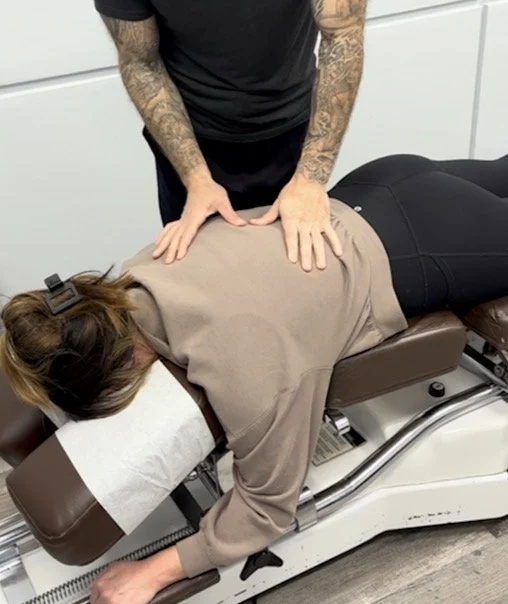
For some patients, that may begin with chiropractic care and improving joint mobility.
For others, it may involve strengthening, movement retraining, changing training habits, improving recovery, or addressing other factors contributing to their symptoms.
The treatment should be built around the person—not just the diagnosis.
If You’ve Tried Everything for Lower Back Pain
If you’re in Plano, Richardson, Frisco, Allen, McKinney, or the surrounding DFW area and you’ve been dealing with persistent or recurring lower back pain, you don’t necessarily need another random treatment.
You may need a better system.
My approach was shaped by my own experience with back pain, years of working with patients, and the process of figuring out what actually helps people move from simply managing pain to building a stronger, more resilient body.
You shouldn’t have to live around your back pain.
The goal isn’t simply to get you out of pain today.
It’s to help you understand your body well enough that you can get back to doing the things you want to do—with confidence.
Ready to figure out what’s actually driving your back pain?
If you’re looking for lower back pain treatment in Plano, TX, schedule a consultation with Dr. Jonathan Pearlman D.C.
Because treating back pain shouldn’t be about guessing.
It should be about having a system.