Do You Have to Take Reta or Weight Loss Peptides Forever? Will the Weight Come Back?
Do you have to take Reta forever? Will you regain the weight after stopping retatrutide or other weight loss peptides? These are some of the most common questions people have when considering GLP-1, GIP, and glucagon-based weight loss medications.
The short answer is: not necessarily—but stopping the medication does not mean your biology automatically stays the same.
Whether someone maintains their weight after stopping a weight loss medication depends on much more than the number on the scale. Appetite regulation, insulin sensitivity, energy expenditure, food intake, physical activity, muscle mass, and the underlying metabolic factors that contributed to weight gain all matter.
And this is where the conversation around “Do I need this forever?” often becomes overly simplistic.
What Is Reta?
“Reta” is short for retatrutide, an investigational medication that acts on three metabolic hormone pathways:
GLP-1 — glucagon-like peptide-1
GIP — glucose-dependent insulinotropic polypeptide
Glucagon
These pathways influence appetite, food intake, glucose regulation, gastric emptying, energy metabolism, and how the body utilizes and stores fuel.
That is one reason I don’t like describing these medications simply as “appetite suppressants.”
Reduced appetite can certainly be part of the effect, but the biology is more complicated than simply making someone eat less.
Why Do People Regain Weight After Stopping Weight Loss Medication?
This is one of the most important concepts to understand.
If someone loses a significant amount of weight and then stops the medication, the physiological environment that helped them lose weight may change.
Appetite can increase.
Food intake can increase.
Satiety can decrease.
And the body may once again have a tendency to defend a higher body weight.
That doesn’t mean the person is weak or lacks discipline.
It means weight regulation is biological.
This is also why telling someone, “Just stop the medication and keep eating the same way,” can be an oversimplification.
The medication may have been helping make that eating pattern sustainable in the first place.
Does Everyone Regain the Weight?
No.
This is where I think the discussion needs more nuance.
Some people may regain a substantial amount of weight after stopping a weight-loss medication. Others may maintain a meaningful portion of their weight loss.
There is no universal rule that says:
“Once you stop a GLP-1, you will gain everything back.”
But there is also no good reason to assume:
“Once I’ve lost the weight, I can stop the medication and nothing will change.”
The answer depends on the individual.
What caused the weight gain in the first place?
How much weight was lost?
What is their current body composition?
How much muscle did they maintain?
What does their diet look like?
How active are they?
How strong is their appetite after discontinuation?
And what metabolic problems were present before treatment?
These questions matter.
Is Taking a Weight Loss Medication Long-Term a Failure?
I don’t think it should be viewed that way.
We don’t generally look at chronic metabolic conditions and say that needing ongoing treatment means someone has failed.
The goal should be better health and sustainable weight maintenance, not winning a competition to see who can discontinue medication the fastest.
For some people, long-term treatment may make sense.
For others, reducing the dose, increasing the interval, transitioning off treatment, or eventually discontinuing may be reasonable under appropriate medical supervision.
The important question isn’t:
“Can I get off the medication?”
The better question is:
“What strategy allows me to maintain the improvements I’ve made?”
What About Weight Loss Peptides?
The same basic question applies to other weight-loss medications and peptides.
GLP-1 medications such as semaglutide and medications involving both GLP-1 and GIP, such as tirzepatide, have demonstrated significant effects on body weight.
Retatrutide adds glucagon activity to GLP-1 and GIP activity, which makes it pharmacologically different from currently approved GLP-1-only or GLP-1/GIP medications.
But regardless of the medication, weight maintenance after treatment is an individual question.
The medication is only one piece of the equation.
What Happens When You Stop Reta?
This is the question I hear most often:
“If I stop Reta, will I gain all my weight back?”
There isn’t a responsible way to promise someone that they will—or won’t—regain weight.
What we can say is that removing a medication that was influencing appetite, food intake, and metabolic physiology can change the conditions that helped produce the weight loss.
That’s why I think people should consider maintenance from the beginning, rather than waiting until they’ve reached their goal weight.
Build the habits.
Maintain resistance training.
Prioritize protein.
Preserve muscle.
Develop a sustainable calorie intake.
Improve metabolic health.
And understand what happens to your appetite and food intake as medication is reduced or discontinued.
You Don’t Want to Lose Weight Just to Become Smaller
This is another part of the conversation that gets overlooked.
The goal shouldn’t simply be:
“How little can I weigh?”
A better goal is:
“How much body fat can I lose while maintaining or improving muscle mass, strength, metabolic health, and quality of life?”
That’s particularly important with substantial weight loss.
Someone can lose a lot of weight while also losing significant lean mass.
The scale may look great while body composition doesn’t improve as much as expected.
That’s why resistance training, adequate protein, appropriate nutrition, and monitoring body composition are important components of a comprehensive weight-loss strategy.
So, Do You Need Reta Forever?
Maybe. Maybe not.
And anyone who gives every patient a universal yes or no is missing the point.
Some people may benefit from long-term pharmacological support.
Some may eventually maintain their results without medication.
Some may require a lower maintenance dose.
And some may discover that discontinuing treatment causes appetite and weight to move in a direction they don’t want.
The important thing is not to view medication as a temporary punishment that you have to “graduate” from.
Instead, think about it as one tool that may help you achieve and maintain metabolic and body-composition goals.
The Bottom Line
If you’re considering retatrutide, semaglutide, tirzepatide, or another weight-loss medication, don’t make the decision based solely on the question:
“Will I have to take this forever?”
Ask the bigger questions:
Why did I gain the weight?
What is driving my appetite and food intake?
Can I maintain my muscle while losing fat?
What happens to my appetite if I reduce or stop treatment?
What will my maintenance strategy look like?
And most importantly:
What approach gives me the best chance of maintaining the health and body-composition improvements I’ve worked to achieve?
Weight loss isn’t the finish line.
Weight maintenance is part of the treatment.
Why Almost Everyone Fails at “Treating Back Pain”
If you’re dealing with lower back pain in Plano, Texas, you’ve probably already tried something: chiropractic care, stretching, exercise, massage, medications, injections, rest or simply hoping it would eventually go away.
But here’s the problem:
Most people who try to “treat” back pain have never actually experienced significant back pain themselves.
That matters.
It’s easy to tell someone to “strengthen your core,” “stretch more,” “fix your posture,” or “just keep moving” when you’ve never experienced what it feels like to wake up and wonder how you’re going to get out of bed, sit through a workday, pick something up off the floor, or simply move without thinking about your back.
I know because I’ve been there.
I (DR Pearlman) didn’t come to master the management / treatment of back pain simply by reading textbooks or learning a list of techniques.
I Experienced it (many time over).
After struggling with my own lower back pain, I went through many of the same treatments and approaches that patients commonly encounter. Some helped. Some didn’t. And some seemed to work temporarily without addressing the bigger problem and usually making my symptoms worse.
That experience led to a different question:
What if treating back pain isn’t about finding one magical treatment—but about understanding why the pain is happening and building a system around the individual?
That question became the foundation for the approach I now utilize with patients.
Back Pain Isn’t One-Size-Fits-All
One of the biggest mistakes people make when dealing with chronic or recurring lower back pain is assuming there is a single solution.
But your back pain may be influenced by several different factors:
Joint/Disc and spinal mechanics
Muscle strength and condition/endurance
Mobility limitations
Previous injuries and how often it flares
Training habits
Sitting and movement patterns
Body composition
Sleep and recovery
Stress and nervous-system sensitivity
The way you load your body during exercise or everyday activities
That means two people can have almost identical pain complaints and require completely different strategies.
This is why simply asking, “What treatment fixes back pain?” may be the wrong question.
A better question is:
“What is contributing to my back pain, and what does my body need to get stronger, move better, and stay out of pain?”
The Goal Isn’t Just to Make Your Back Feel Better
Temporary pain relief can be valuable. But if your back feels better for a few days and then the pain returns every time you lift weights, play golf, work in the yard, travel, or sit at your desk, something is missing.
The goal should be to build a body that can tolerate the activities you actually want to do.
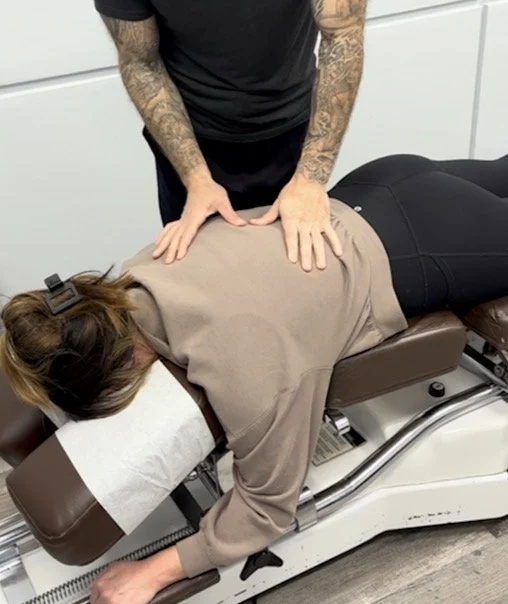
For some patients, that may begin with chiropractic care and improving joint mobility.
For others, it may involve strengthening, movement retraining, changing training habits, improving recovery, or addressing other factors contributing to their symptoms.
The treatment should be built around the person—not just the diagnosis.
If You’ve Tried Everything for Lower Back Pain
If you’re in Plano, Richardson, Frisco, Allen, McKinney, or the surrounding DFW area and you’ve been dealing with persistent or recurring lower back pain, you don’t necessarily need another random treatment.
You may need a better system.
My approach was shaped by my own experience with back pain, years of working with patients, and the process of figuring out what actually helps people move from simply managing pain to building a stronger, more resilient body.
You shouldn’t have to live around your back pain.
The goal isn’t simply to get you out of pain today.
It’s to help you understand your body well enough that you can get back to doing the things you want to do—with confidence.
Ready to figure out what’s actually driving your back pain?
If you’re looking for lower back pain treatment in Plano, TX, schedule a consultation with Dr. Jonathan Pearlman D.C.
Because treating back pain shouldn’t be about guessing.
It should be about having a system.
The Peptides and Supplements I Take Daily
What is One of the most important things I can tell you about health optimization?
After 7½ years of collegiate and continued education studying the human body, including advanced nutrition, physiology, anatomy, biology, biochemistry, and endocrinology. When people ask me, “What supplements do you take every day?” or “What peptides are you on?” they may be surprised by my answer.
And because I don’t want to be “that guy” , I will start by letting you in on my 44 year old (almost daily stack/ protocol)
Supplements:
Almost daily ( Berberine , aged garlic extract, Betaine HCL w/pepsin with protein meals, vitamin D3 and fish oil) (not as often = creatine monohydrate 5g, magnesium malate also glycinate, vitamin B1, B3, B6 and zinc ) (rarely but one x a week usually = Tongkat Ali , Nad+ , oregano extract , 5 amino 1, L arginine, ) from food I get tons of collogen and vit C along with K2 from sauerkraut which is my probiotic)
Peptides :
Reta 1 x weekly .75mg from GREY market 3rd party tested source (eat light that day and following day) BPC-157 daily 300mcg -500mcg compounded sterile pharm when I’m flared or trying to aggressively “treat” MSK injury. Thymosin beta-4 to aid in vascular/ tissue repair along withThymosin Alpha-1 at 1mg- 1.5mg 2 x weekly for immune regulation and inflammation modulation with KPV some times added in Sub Q. Also , Grey market mots-c 2x -4x monthly back to back days 2mg each doses for a RESET and energy boost. I will take sermorelin GHRH analog (compounded sterile only) nightly for intention cycles to improve sleep and recovery 4 hours FASTED ! for me , it is the only logical way unless very metabolically healthy ALWAYS (but this is not an always Peptide) and I will use nasal Semax /selank spray intranasal daily at work (3-4 x weekly) mid day.
NOW , Here COMES the Important part below 😊
THERE are times (other than one time a week RETA) I will take absolutely nothing and feel even better than taking everything listed above .
I don’t believe your body needs to be constantly bombarded with something simply because it is beneficial.
More isn’t always better.
We have become obsessed with the idea that optimization means adding.
Add creatine.
Add berberine.
Add magnesium.
Add another peptide.
Add another supplement.
Add another injection.
Add another “health hack.”
And eventually, the stack becomes so complicated that we forget the most important question:
What is my body asking for right now?
There is a fundamental difference between giving the body a useful signal and constantly forcing that signal.
I like to think about health optimization as signal → response → recovery.
You provide an appropriate stimulus.
Your body responds.
Then you allow the system to recover, adapt, and do what it is supposed to do.
That concept applies to far more than exercise.
It applies to nutrition.
It applies to fasting.
It applies to supplements.
It applies to peptides.
And yes, it even applies to the things we consider “healthy.”
Take creatine, for example.
Creatine is one of the most well-studied and generally well-tolerated performance supplements we have.
It can increase phosphocreatine availability, support ATP regeneration, improve training performance, and potentially provide benefits beyond muscle.
So why wouldn’t I automatically say:
“Take it every single day forever.”
Because beneficial does not automatically mean necessary every day for every person.
There are legitimate reasons someone may choose continuous creatine supplementation, and there is good evidence supporting daily use for maintaining elevated muscle creatine stores.
But the larger lesson is more important than creatine itself:
We shouldn’t automatically turn every useful intervention into a lifelong daily requirement.
Sometimes the question isn’t:
“What else can I take?”
It’s:
“Do I actually need this right now?”
Berberine is another great example.
Berberine can be a powerful metabolic tool.
It can influence glucose metabolism, AMPK signaling, insulin sensitivity, and the way your body handles nutrients.
For some people, strategically using berberine around meals can be a useful tool when carbohydrate intake or post-meal glucose management is a concern.
But again:
A powerful tool doesn’t mean you need to use the tool every single day.
If your nutrition is excellent, you’re physically active, your glucose regulation is already good, and there isn’t a specific reason to use it continuously, why automatically assume more is better?
This is where individualized physiology matters.
You don’t need to take something simply because it can do something.
And then we get to peptides.
This is where I think the conversation gets really interesting.
Peptides should not become:
“What’s the next thing I can put into my body?”
They should become:
“What physiological problem am I trying to solve?”
That distinction changes everything.
A peptide shouldn’t replace sleep.
It shouldn’t replace resistance training.
It shouldn’t replace walking.
It shouldn’t replace eating enough protein.
It shouldn’t replace learning how to manage your calories.
It shouldn’t replace recovery.
And it certainly shouldn’t become an excuse to continue doing things that are actively working against your health.
In my view, one of the most valuable things about peptides is that they can sometimes become a gateway to better behavior.
Someone starts paying attention to their recovery.
They start sleeping better.
They start training consistently.
They start eating real food.
They begin tracking their metabolic health.
They start taking their health seriously.
The peptide becomes one component of a larger strategy rather than the strategy itself.
That’s a completely different mindset.
Even exercise needs an off switch.
This is something people don’t like hearing.
Exercise is good.
Exercise is necessary.
Exercise is one of the most powerful forms of medicine we have.
Yet, more exercise is not automatically more “health”.
Training is a stressor.
A controlled stressor, yes.
A beneficial stressor, absolutely.
But still a stressor.
That’s the entire concept of hormesis.
You expose the body to appropriate stress.
The body responds.
It adapts.
And you become more resilient.
But adaptation doesn’t happen because you continually beat the body down.
It happens during recovery.
There are days when I want to train hard.
There are days when the appropriate stimulus is a long walk.
There are days when mobility work is enough.
And there are days when the smartest thing I can do is essentially nothing.
That isn’t laziness.
That’s physiology.
Sometimes the best protocol is less.
This is probably the hardest concept for people who are obsessed with optimization.
They want the perfect stack.
The perfect peptide.
The perfect supplement schedule.
The perfect workout.
The perfect diet.
But the human body isn’t a machine that becomes healthier because you keep adding inputs.
It is a biological system capable of adapting, compensating, signaling, recovering, and changing its response based on what is happening around it.
So sometimes I intentionally cycle things.
Sometimes I take days off.
Sometimes I reduce the training volume.
Sometimes I eat differently.
Sometimes I prioritize sleep over getting another workout in.
Sometimes I don’t take anything at all.
And if I’m not feeling right?
That’s information.
Instead of automatically adding something to fix the feeling, I want to ask why I’m feeling that way in the first place.
Is the training load too high?
Is recovery inadequate?
Is sleep poor?
Is nutrition insufficient?
Is there too much stress?
Am I introducing something that my body doesn’t tolerate particularly well?
Or am I simply assuming that because something is considered “healthy,” my body must want more of it?
Your body doesn’t need to be constantly impressed.
That’s probably the biggest takeaway.
You don’t need to constantly stimulate AMPK.
You don’t need to constantly manipulate insulin.
You don’t need to constantly stimulate growth hormone.
You don’t need to constantly suppress appetite.
You don’t need to constantly increase performance.
And you don’t need to constantly add another supplement because someone on the internet told you that you are missing something.
Sometimes the intervention is the signal.
Sometimes the intervention is the recovery.
Sometimes the intervention is doing less.
The goal isn’t to see how many things you can put into your body.
The goal is to create an environment where your body can actually respond appropriately to the signals you’re giving it.
Nutrition.
Sleep.
Movement.
Resistance training.
Cardiovascular fitness.
Recovery.
Stress management.
Then, when appropriate, we can talk about supplements, peptides, hormones, and other tools.
Tools are valuable.
But tools should serve the foundation—not replace it.
So, back to the original question:
“What supplements and peptides do I take every day?”
Nothing.
And honestly?
I’m comfortable with that.
Because optimizing your health isn’t about doing everything every day.
It’s about knowing what to do, when to do it, why you’re doing it—and when to leave your body alone.
BPC-157 for Back Pain: How Targeted Peptide Therapy May Support Tissue Recovery and Reduce Inflammation
Back pain is one of the most common reasons people seek care, and many patients are looking for options beyond simply masking symptoms.
While proper movement, rehabilitation, chiropractic care, strength training, and addressing underlying mechanical issues remain foundational, emerging therapies such as peptide-based approaches are gaining attention for their potential role in supporting tissue repair and regulating inflammation.
One peptide that has generated significant interest is BPC-157.
What Is BPC-157?
BPC-157 (Body Protection Compound-157) is a peptide derived from a protective protein sequence originally studied in the gastrointestinal system. Research, primarily in animal and laboratory models, has explored its potential effects on:
Tissue healing pathways
Blood vessel formation (angiogenesis)
Inflammatory signaling
Tendon, ligament, muscle, and connective tissue recovery
Although more human clinical research is needed, early studies have created interest in how BPC-157 may influence the body’s natural repair mechanisms.
How Could BPC-157 Relate to Back Pain?
Many cases of back pain involve a combination of factors:
Local inflammation
Tissue irritation
Muscle guarding
Reduced mobility
Mechanical stress on joints and soft tissues
A comprehensive approach does not simply focus on the painful area — it addresses both the mechanical environment and the biological environment.
This is where combining targeted therapies with hands-on care may be beneficial.
Why Some Patients Worry About Injections Near the Back
A common concern patients have is:
“Why would anyone inject near the spine or an area that already hurts?”
This fear is understandable. However, it is important to clarify that these are not large needles placed deep into the spine.
The needles commonly used for subcutaneous peptide administration are extremely small, often similar in size to those used for insulin injections.
A trained provider who understands anatomy can select appropriate areas of administration while considering:
The location of symptoms
Surrounding tissues
Safety considerations
The patient’s specific condition
The goal is not to “inject into the spine.” The goal is to safely deliver therapy while supporting the area involved in the recovery process.
The Importance of Combining Mechanical and Biological Approaches
Back pain is rarely caused by one single factor.
The body functions as an integrated system.
Mechanical care may help address:
Joint restrictions
Abnormal movement patterns
Soft tissue tension
Excess pressure or irritation in surrounding structures
Targeted therapies may aim to support:
The inflammatory response
Tissue remodeling
Recovery processes
This concept is similar to what researchers have explored in preclinical studies: improving the local environment around injured or irritated tissues may influence recovery.
A Personalized Approach Matters
There is no single treatment that works for every person with back pain.
A thorough evaluation should consider:
The type of back pain
Duration of symptoms
Injury history
Movement patterns
Strength and mobility
Lifestyle factors
Nutrition and metabolic health
At DFW Functional Medicine & Performance, we focus on individualized strategies that combine evidence-informed therapies, functional assessments, and personalized care plans.
The Bottom Line
BPC-157 is an emerging area of interest in regenerative and performance medicine. While more human research is needed, many patients are interested in how peptide therapy may complement other approaches for supporting tissue health.
For individuals considering peptide therapy, the most important factors are:
Proper patient selection
Understanding the limitations of current research
Working with a knowledgeable healthcare provider
Combining biological support with appropriate mechanical care and rehabilitation
Back pain recovery is not just about reducing symptoms — it is about creating the conditions that allow the body to function and recover better.
Interested in learning whether peptide therapy and a personalized functional approach may fit your goals? Schedule a consultation with Dr. Pearlman at DFWFunctionalMedicineandPerformance.com
APRIL FOOLS (A story and a Lesson ALL in ONE)
When you go to a large “functional Medicine” clinic with chronic fatigue and headaches only to be told you have a cortisol issue by the owner/lead Medical Doctor because they did not deem it was necessary to order an MRI of your brain, you’d think that was A JOKE? right ???
Well , i am sad to say , NO , it’s not a joke … This actually happened not long ago. The worst part about the story is I used to this was an acceptable referral and I as a chiropractor should “stay in my lane” ,,, I mean after all , this exact DR. told the same patient not to see me , because I would not “fix” the root cause of their issue.
Yet, thanks to a great experience they had years past with us , they returned for my (Dr. Pearlman) Opinion. It turned out that the “other clinic” had not ordered the MRI because they thought that it was too expensive and not necessary YET.
WE (my self and Nurse Practioner Jen) explained that we have a Cash /self pay price option near by that the patient can opt in to for $375 MRI and it was a (no PUN) No brainer.
Afterall Licensed chiropractors are Doctors of in the state of Texas with prescriptive authority for imaging/labs and I let my patients know what their options are beyond expensive urine from too many useless supplements.
One day later the female patient was diagnosed with a benign Meningioma tumor “non-malignant” yet the cause of her symptoms, a case where structure did dictate function.
So, No joke here in April 2026 , just real medical intervention and getting people to the right places to get answers without wasting their time and money.
A win for the good guys as they say :)
HGH or TRT ? How do I know which one (or both) is right for me ?
Do I Need Growth Hormone? How It Differs From TRT for Men and Women
If you’re over 35 and feeling more tired, softer, foggier, or slower to recover — you may be wondering:
“Do I need growth hormone… or testosterone?” as they’re often confused, sometimes marketed together, and frequently misunderstood. Growth hormone (GH) and testosterone (TRT) do very different things in the body and they apply differently to men and women. Here’s the clear, clinical truth.
Growth hormone is not just for kids (though is commonly used to care for GH deficiency), yet in adults, GH is responsible for:
• Fat metabolism
• Skin thickness and elasticity
• Sleep quality
• Muscle recovery
• Tendon and joint health
• Brain function
• Immune resilience
• Cellular repair and longevity signaling
As we age, GH production declines 15–25% per decade after our 30s.
Low GH often looks like:
• Increased belly fat
• Thinner skin
• Poor sleep
• Low exercise recovery
• Joint pain
• Brain fog
• Slowed metabolism
• Low motivation and more.
What Testosterone (TRT) Actually Does
Testosterone is a sex steroid hormone , not a repair hormone like GH.
It primarily drives:
• Muscle mass and strength
• Libido and sexual function
• Motivation and confidence
• Bone density
• Red blood cell production
• Cognitive sharpness
• Fat distribution
Low testosterone looks like:
• Low libido
• Fatigue
• Mood changes
• Muscle loss
• Poor training response
• Increased fat
• Depression or apathy
Growth Hormone vs TRT: The Real Difference
Cellular repair hormone vs Sex steroid hormone
Improves sleep & recovery vs Improves strength & libido
Can HELP drive fat loss indirectly vs drives muscle directly
Anti-aging & longevity vs Performance & vitality
They are not interchangeable , but can support one another to treat different problems.
Do I Need Growth Hormone or TRT?
As Always! IT depends !
Things such as your symptoms, labs, body composition, training status/activity, age, sleep quality, nutrition, stress levels, Insulin sensitivity and more .
You may benefit from GH if :
• You’re lean but can’t lose fat
• You recover poorly from workouts
• You sleep lightly or wake often
• Your skin is thinning
• You feel inflamed or stiff
• You age faster than expected
You may benefit from TRT if:
• Your libido is low
• You’ve lost muscle
• You feel apathetic or unmotivated
• Your testosterone labs are low
• You’re not responding to training
• You feel “flat” emotionally
Most hormone clinics/HRT clinics get it wrong !
They only offer /prescribe : TRT, Estrogen, Progesterone and they ignore GH because:
• It’s harder to dose
• It’s more expensive
• It requires deeper physiology knowledge
Our Functional Medicine and Performance Approach:
Growth hormone is not a replacement for TRT, and TRT is not a replacement for growth hormone.
They are tools, not magic! The right choice depends on you and your physiology, not marketing and empty promises.
BPC-157 and why local injections matter .
Compounded Sterile Peptides in Plano, Texas
BPC-157 has become one of the most talked-about peptides for tissue repair, musculoskeletal recovery, and gut healing. But not all BPC-157 products are equal — and not all administration methods work the same. At our sterile-compounding pharmacy partners here in Plano, Texas, BPC-157 is prepared under strict pharmaceutical standards to ensure purity, stability, and clinical effectiveness.
BPC-157 (Body Protection Compound–157) is a synthetic fragment of a naturally occurring gastric protein (BPC). It’s widely studied for its ability to:
Accelerate soft-tissue healing
Improve tendon-to-bone recovery
Enhance angiogenesis (formation of new, healthy blood vessels)
Reduce local inflammation
Support gastrointestinal mucosal repair
Improve nitric oxide signaling and microcirculation
The science supports “localized injections” for musculoskeletal repair.
Although oral and systemic forms exists, localized subcutaneous injection near the injured tissue often leads to faster results. Here’s why:
Injecting BPC-157 near the injury provides:
A high local tissue concentration gradient, which enhances diffusion into damaged structures
Greater exposure of tendons, ligaments, fascia, or joint capsules to active peptide
Faster uptake by local fibroblasts and endothelial cells (cells involved in repair)
This mirrors what we see with PRP, prolotherapy, and even certain orthopedic medications AKA proximity matters.
Studies show that BPC-157 upregulates VEGF and promotes microvascular repair.
This is most effective when the compound is delivered right in the region where angiogenesis is needed, such as:
Chronic tendinopathy
Partial ligament tears
Poorly vascularized regions (rotator cuff, Achilles, tendons, even scar tissue and hurt back muscles)
Local delivery maximizes these physiological benefits.
Patients often report improved mobility and reduced pain as collagen remodeling accelerates.
Even though BPC-157 is well-tolerated and non-toxic in studies, peptide therapy is not DIY medicine. Here’s why involving a trained clinician is essential.
A professional will identify:
The true anatomical source of pain (primary injury vs. compensatory strain)
Whether the injury is tendon, ligament, bursa, fascia, or muscle
Whether the injury is acute, sub-acute, or chronic — each requires a different strategy
Self-injecting without imaging or clinical evaluation can waste time or worsen symptoms!
Many online or “research-grade” peptides fail purity testing.
A sterile compounded Pharmacy in Plano provides:
USP-grade sterile vials
Verified potency
Endotoxin-free production
Stability testing
Proper pH and reconstitution standards
This dramatically reduces infection risk and ensures you’re injecting an accurate dose not impurities or degraded peptide.
Consultation is mandatory if you have:
Autoimmune disease
Tendon degeneration or partial tears
Chronic steroid use
Diabetes or slow-healing conditions
Recent surgery
Cardiovascular disease
A clinician adjusts the treatment plan to avoid complications and maximize healing.
We can get you the good stuff ! Just reach out for more information.
What is our Mission Statement ?
At our core, we are not here to make people simply feel good we are here to help people get truly healthy.
Our work is grounded in honesty, transparency, and a commitment to facing reality together. There is no judgment, ever. Just clear conversations about what’s actually happening with your health, our providers are dedicated to guiding you toward the most optimal outcomes.
In a world where many will tell you what you want to hear, sell you far more than you need, or enable unhealthy patterns, we choose a different path. We believe people deserve the truth, delivered with respect and clarity — not confusion, pressure, or false promises.
Our responsibility as providers is to give you only what is necessary, what is effective, and what is aligned with your long-term wellbeing. We offer the necessary evidence-guided tools and modalities that will genuinely move you forward, not quick fixes (they don’t exist) or unnecessary add-ons.
We stand with you, not above you ,,,,partners in your pursuit of sustainable health, strength, and performance. Our mission is simple:
Tell the truth. Deliver on that truth while Empowering you and yours! We help you make the best decisions for your health, thus your life and the lives of those closest to you.
The Truth about GLP-1 Peptides and weight management
GLP-1 peptides, like semaglutide or even Experimental RETA GLP-3 “Miracle weight loss Peptides”, are changing the way we think about weight management. They help control appetite, regulate blood sugar, and even GREATLY improve fat metabolism. Sounds like a magic bullet, right? Not quite. While these medications can be powerful tools, they work best when combined with the basics: good/Excellent nutrition, exercise, and protein Prioritization.
Why NUTRITION IS beyond the most IMPORTANT component!
Even with GLP-1 therapy, the food you eat directly affects your results to the highest degree. Whole foods in form of paleo style meats and fish, plenty of leafy green vegetables amongst others, and healthy fats (avocado/feta cheese/nuts) give your body the nutrients it needs to maintain or build muscle, support metabolism, and keep your energy stable. Sugary refined or processed foods can STOP your progress especially if on medication(s).
Exercise “especially weight training” is non-negotiable!!
Moving your body isn’t just about burning calories. Resistance training preserves lean muscle, and cardio improves heart and metabolic health. GLP-1 peptides may make it easier to eat less, but exercise ensures the weight lost is fat, not a lot of muscle or bone (not to mention hair loss). The longer term goal is to have a healthy metabolism, not a broken one, due to caloric restriction for a prolonged time with exercise/caloric demands rising.
Protein supports satiety, keeps your metabolism active, and preserves lean mass. With GLP-1 peptides, your appetite may decrease, making it tempting to skimp on protein. However, prioritizing protein in every meal helps maintain strength and supports long-term weight management.
GLP-1 peptides are an exciting tool, but they aren’t a replacement for healthy habits. Combine them with a nutrient-rich diet (nutrition regimen), regular exercise, and plenty of protein for the best and most importantly “sustainable” results. Think of GLP-1 therapy as a turbo boost or modified exhaust, you still need to drive and handle YOUR Sports car.
DR P
Why it is so hard to find a good Doctor?
Have you ever been so let down while navigating your health concerns that you just thought “all doctors suck” !! Well, as it turns out , you are not alone. Some data will suggest only about 57 % of people in the united states think doctors have their “best interest” at heart . I don’t know about you , but that leaves almost have that feel differently.
Here is the good news. THERE ARE BAD APPLES IN EVERY PROFFESION :) oh , that is the good news. But the bad news is that when it comes to healthcare and the moments we feel sick is just the absolute worst timing for a medical provider to have a bad showing.
What are some reasons this happens?
1) insurance reimbursement incentive/dictations. yes , it’s a real thing . The doctors or providers that work at clinics that seem “traditional” and “take your insurance” are under tremendous pressure to keep up with notes taking and EHR standards and protocols that would make most people crumble under pressure even when there is no pressure to be had.
2) Time with patients . This is right in line with the above mentioned protocols . It is a reimbursable /billable situation and though no 2 patients are the same in terms of complaint and what the notes will say , the provider will hustle to get to the next patient because they simply must and have not much of a choice. This often results in the patient feeling unheard, or at the least left without enough time to divulge all of their symptoms and may be left with additional questions. Yet the worst is when the doctor or provider is in CYA mode and makes a referral and you can’t even see the other provider for 2 months (if you are lucky) .
3) Doctors in these settings are often so overwhelmed that they burnout so fast and seem to blame the patients for non-compliance and it comes off from them to us the patient as needing to be 10000% accountable (now, of course this is not ALWAYS TRUE, but i believe exists more than people in these settings will ever admit).
What can be done about this ? how will this change ?
a) Just find a cash pay / accessible doctor or provider that does not “take insurance” and I think you will be pleasantly surprised just how affordable and accessible they are.
b) come to terms that the Insurance based doctors which are big medicine and hospital setting white coat wearing (usually) providers are great for what they should be great for ….. EMERGENCY and Surgery! That’s right , those two ITEMS require hundreds of thousands of dollars and teams of medical proffesnals that is precisely the reasons you are paying a premium and a copay for “Health insurance” (whether you understand it or not), not for office visits and the attention you , me or anyone else expects from their provider.
c) Do everything in your power to go see a “recommend/referred” doctor of you friend , family or loved one. I can’t tell you how many times someone has referred their loved one to me and because they were trying to save a buck or “use their insurance” they went elsewhere only to suffer and get nowhere…. they always show up later and get the same impression (say the same thing) I should have just come in sooner when what’s their name told me :(
So, there it is…
Doctors don’t all suck , but I can see why so many people as patients leave a visit feeling like they do.
We need “self Accountability”
Imagine a world where we are (as a collective) “so sick” that every bite of processed food can and will influence our mood , behavior , body composition , blood work, and pocket book with such negative consequences yet we consistently do it .
You don’t have to image that hard …. It is here in the good ole’ US of A :)
and most of us participate in it Knowingly , willingly and happily.
Have we just given in ? I mean do we all actually understand just how bad the processed prepackaged refined foods are? assuming we do , why do we consistently say things like “yolo” , “But its sooooo good” , “It’s only One” or “just a little wont hurt me”.
The thing is , even if it was untrue about the consequences of consumption (hint, it’s not) the idea of how often we purchase these foods has allowed the manufactures to increase prices to the point that most families will still purchase and not realize the money they would save if they purchased more satisfying Real food from various markets that are easy to prepare.
The benefits from turning away from “ junk food “ are as follows:
1) easy to make and fill up faster (cant be hungry if eating real protein /fat / carb ) satiated.
2) less money to buy bulk potatoes , rice , oats , carrots , fruits , eggs , meats , fish
3) less bad mood and behaviors because of glucose crashes and dopamine spikes.
4) productivity and good moods with more time to focus on being productive because you have energy and are not thinking about your next snack.
and hey , if we are lucky , Kellogs’s and similar companies will close up shop so they can stop adding to the issues that are making people so sick.
Be discipled, be smart, be proactive , be accountable .
DR P

Real “natural” Health Advice August 2025
It all begins with an idea.
I wanted to start August 2025 On our new website with an authentic Topic to for all to read .
It’s pretty Obvious by now , That we have a body image Epidemic That is simply called an obesity epidemic That overlap within our culture.
Simply put, We have atrocious eating habits, whether we want to admit it or not it is based on the food that is available to us, and The societal norms that go along with enjoying food and alcohol ….
And the problem isn’t that we partake in it, It’s that we partake in it too much, It gets a hold of us, And then we don’t feel good about the way we look.
It’s true …. both men and women , though a bit different between the two , we simply crave to look good so we can feel good.
I mean honestly, And can we just be honest.
what married couple, Or even a newly dating couple Doesn’t want to feel attracted to one another and have a great sex life with lots of energy.
Let alone when you go to a party or to the beach or on vacation to look good based on the fact that maybe you think someone will judge you or fat shame you for even a few pounds because of what we see on Instagram or TikTok.
And believe me, I am not taking the position that this is a healthy thing or an acceptable way to behave if you are shaming someone who has gotten out of shape or has put on a few pounds.
Again, I am just stating the reality of what I believe we mostly feel , see and experience.
The truth is these new weight loss peptides like Ozempic Have given people an avenue to lose weight fast, And a lot of weight. Yet, Ignoring too many of the side effects or consequences of taking too high dose, And not really understanding what it means to eat so little.
I hear people talk about turning off the food noise…. I understand what they mean because I am a medical professional, But I do not believe people understand How important calories are on a consistent basis.
And you might be thinking a caloric deficit leads to longevity, A caloric deficit and fasting leads to autophagy, A caloric deficit will make me not obese, therefore healthy.
And you are correct in thinking there are certain aspects of why fasting or caloric deficit is so important….
Yet you must understand that at our core and within our primitive nature We are Hunter gatherers….
This deep drive to be hunter-gatherers and tribes people Is the same reason we like getting together in groups and sharing our common interest.
That is centered around doing activities, Burning calories, a.k.a. utilizing energy, A.k.a. getting tasks done and feeling good about the accomplishments.
The way you are rewarded for this is through eating with the group.
I may have oversimplified this a bit, but I hope it makes sense and also relay the message that eating healthy food is important.
And eventually utilizing things like weight loss peptides You will lose the desire to not only eat, but the ability of the G.I. tract and metabolism to work the way in which is intended. Especially if you become more active and are not careful about your dose and eating appropriate amounts of calories to maintain the proper body composition and muscle as we age.
People often think of getting old and breaking a hip is a disaster and a death sentence…. So why wouldn’t we think of getting older and injuring ourselves in any other manner to be equally as detrimental if we are frail without muscle and without good balance from Practicing athletic prowess?
If you are following what I have been saying here, I only urge you to understand deeply, the consequences of relying on GLP -1 And Ozempic like drugs.
What it is really doing to your metabolism, Your body Composition, Your neurology , biology and anatomy… And why it is so important to eat good food , to feel good about your body composition (not just weight) and thus your comfort in social settings.
Dr P