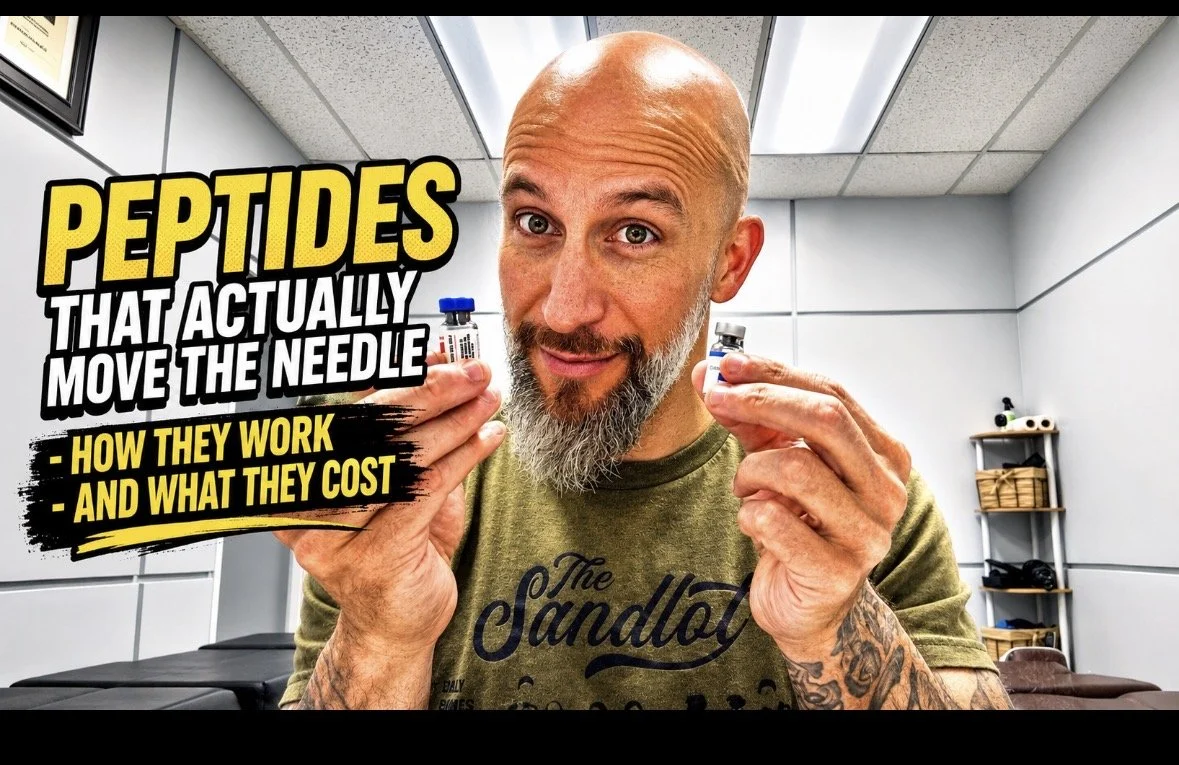
BPC-157 for Back Pain: How Targeted Peptide Therapy May Support Tissue Recovery and Reduce Inflammation
Back pain is one of the most common reasons people seek care, and many patients are looking for options beyond simply masking symptoms.
While proper movement, rehabilitation, chiropractic care, strength training, and addressing underlying mechanical issues remain foundational, emerging therapies such as peptide-based approaches are gaining attention for their potential role in supporting tissue repair and regulating inflammation.
One peptide that has generated significant interest is BPC-157.
What Is BPC-157?
BPC-157 (Body Protection Compound-157) is a peptide derived from a protective protein sequence originally studied in the gastrointestinal system. Research, primarily in animal and laboratory models, has explored its potential effects on:
Tissue healing pathways
Blood vessel formation (angiogenesis)
Inflammatory signaling
Tendon, ligament, muscle, and connective tissue recovery
Although more human clinical research is needed, early studies have created interest in how BPC-157 may influence the body’s natural repair mechanisms.
How Could BPC-157 Relate to Back Pain?
Many cases of back pain involve a combination of factors:
Local inflammation
Tissue irritation
Muscle guarding
Reduced mobility
Mechanical stress on joints and soft tissues
A comprehensive approach does not simply focus on the painful area — it addresses both the mechanical environment and the biological environment.
This is where combining targeted therapies with hands-on care may be beneficial.
Why Some Patients Worry About Injections Near the Back
A common concern patients have is:
“Why would anyone inject near the spine or an area that already hurts?”
This fear is understandable. However, it is important to clarify that these are not large needles placed deep into the spine.
The needles commonly used for subcutaneous peptide administration are extremely small, often similar in size to those used for insulin injections.
A trained provider who understands anatomy can select appropriate areas of administration while considering:
The location of symptoms
Surrounding tissues
Safety considerations
The patient’s specific condition
The goal is not to “inject into the spine.” The goal is to safely deliver therapy while supporting the area involved in the recovery process.
The Importance of Combining Mechanical and Biological Approaches
Back pain is rarely caused by one single factor.
The body functions as an integrated system.
Mechanical care may help address:
Joint restrictions
Abnormal movement patterns
Soft tissue tension
Excess pressure or irritation in surrounding structures
Targeted therapies may aim to support:
The inflammatory response
Tissue remodeling
Recovery processes
This concept is similar to what researchers have explored in preclinical studies: improving the local environment around injured or irritated tissues may influence recovery.
A Personalized Approach Matters
There is no single treatment that works for every person with back pain.
A thorough evaluation should consider:
The type of back pain
Duration of symptoms
Injury history
Movement patterns
Strength and mobility
Lifestyle factors
Nutrition and metabolic health
At DFW Functional Medicine & Performance, we focus on individualized strategies that combine evidence-informed therapies, functional assessments, and personalized care plans.
The Bottom Line
BPC-157 is an emerging area of interest in regenerative and performance medicine. While more human research is needed, many patients are interested in how peptide therapy may complement other approaches for supporting tissue health.
For individuals considering peptide therapy, the most important factors are:
Proper patient selection
Understanding the limitations of current research
Working with a knowledgeable healthcare provider
Combining biological support with appropriate mechanical care and rehabilitation
Back pain recovery is not just about reducing symptoms — it is about creating the conditions that allow the body to function and recover better.
Interested in learning whether peptide therapy and a personalized functional approach may fit your goals? Schedule a consultation with Dr. Pearlman at DFWFunctionalMedicineandPerformance.com